
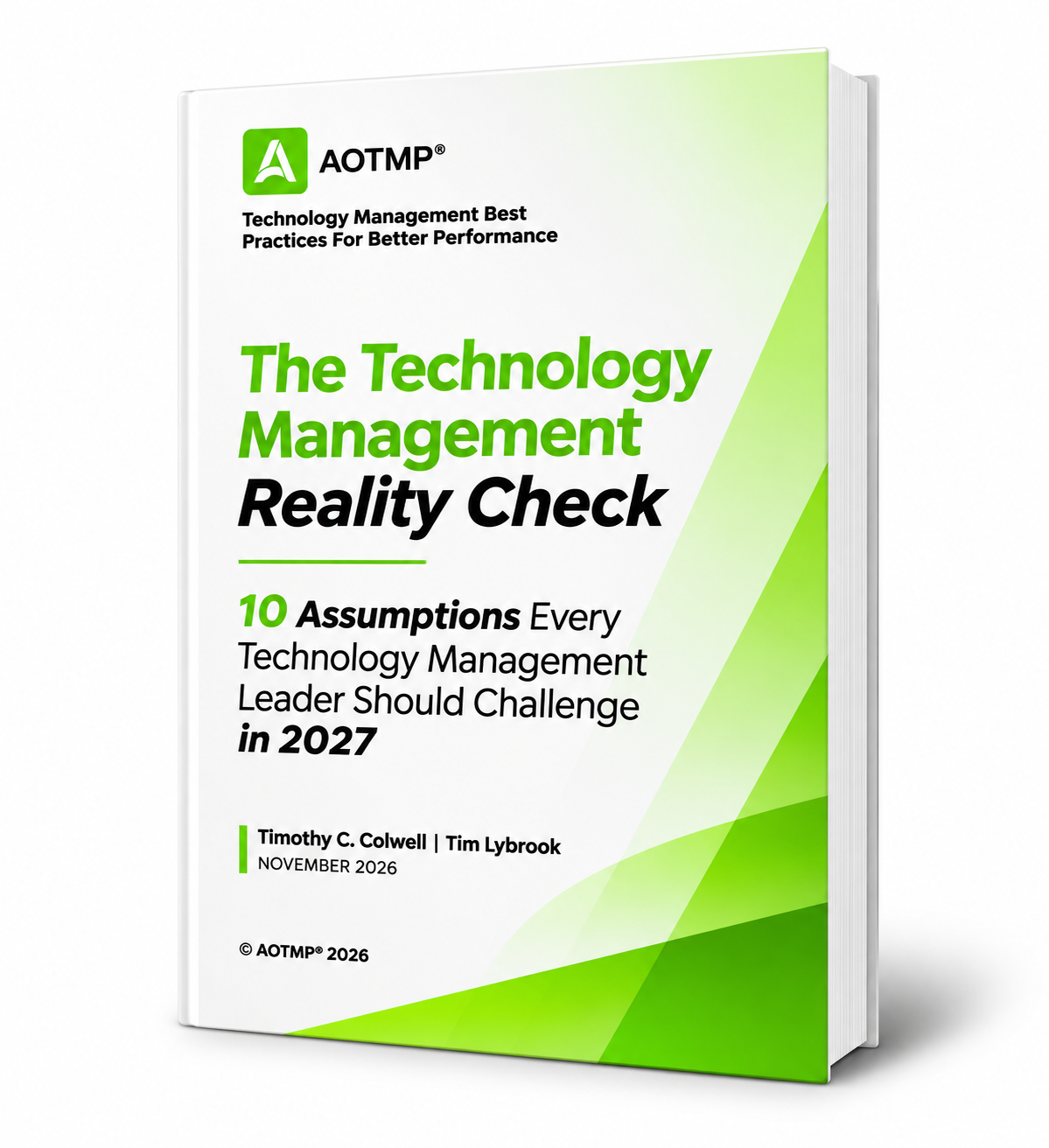
From Assumptions to Evidence
Download PDFQuestioning assumptions is a useful starting point. Improving performance requires evidence: an understanding of current practices, a baseline against which progress can be measured, and a disciplined approach to deciding what to change.
The Leadership Self-Assessment helps identify areas that deserve closer examination. A more structured evaluation can then clarify strengths, gaps, priorities, and opportunities across technology management responsibilities.
AOTMP offers a One-Time Team Performance Assessment to help establish a baseline and identify opportunities for improvement. The Team Performance Subscription provides a continuing approach to measuring progress and improving performance across ten areas over time.
From Insight to Improvement
The Team Performance Program establishes a baseline, identifies opportunities and helps you measure progress as your team develops and applies new capabilities.
Financial Management
Strategy, budgeting, cost management and financial reporting for the technology environment.
Significant Improvement
Stronger cost controls, better forecasting and more consistent financial reporting have improved overall performance.
Governance & Controls
Policies, accountability, compliance and risk management for the technology environment.
Steady Progress
Clearer policies, stronger accountability and improved compliance processes are driving improvement.
Vendor Management
Vendor strategy, relationship management, performance and value realization.
Moderate Improvement
Better vendor performance management and stronger value tracking are improving results.
A Clearer Path to Higher Performance
The scorecard gives you a baseline, helps you prioritize improvement opportunities, and provides a way to measure progress over time.
- Understand where you are today
- Identify where to focus
- Measure improvement over time
Learn more: AOTMP Team Performance Subscription
Turning the Reality Check into Action
The assumptions explored in this report are not arguments against savings, dashboards, automation, AI, supplier agreements, reliable systems, or established practices. Each can play an important role in effective technology management. The question is whether the organization has evidence that these activities and practices are producing the outcomes it needs.
Leaders who challenge familiar assumptions can uncover opportunities to improve decisions, strengthen accountability, build organizational capabilities, and deliver more meaningful value.
The ultimate measure of technology management isn’t how well we perform the activities we’re responsible for. It’s how much better the business performs because of them. That’s the reality check—and the opportunity for 2027 and beyond.